A Note on Modern Cast Counterfeit Malayamān Coins
Ian
Todd, Canberra, September 2019
The
ancient Malayamān hereditary chiefs ruled in eastern south India around
the first to the third century CE, neighbours of the Cheras and Cholas. Their
rare die struck copper coins, which come in a number of varieties, feature a
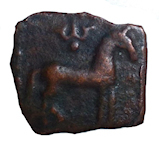
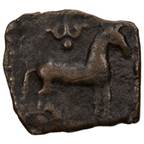
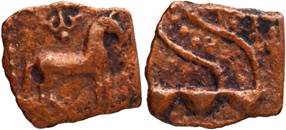
horse (the royal emblem of the kingdom) on the obverse and a geographic scene
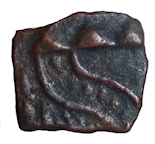
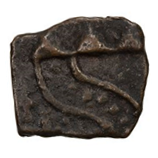
on the reverse. The scene is believed to map the location of the Malayamān
capital Tirucoilur on the banks of the River Ponnaiyar, with the mountain range
leading up to Karnataka in the background (M. Mitchiner,
The Coinage and History of Southern
India: Part Two Tamilnadu – Kerala,
Hawkins Publications, London, 1998, p. 93)
Because
of their rarity Malayamān coins are relatively expensive, which has
brought the unfortunate consequence that they have drawn the attention of a
modern-day counterfeiter who has produced an unknown quantity of good quality
fakes. Seen individually these pieces would quite easily pass muster as genuine
coins, as evidenced by the fact that they have been accepted for sale by at
least three very reputable auction houses. However, when examples are viewed
together their regrettable provenance becomes obvious. As the following
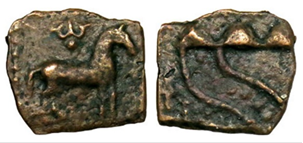
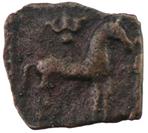
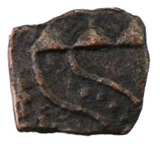
examples show, the features of the coins – including very noticeably the shape
of their planchets – are identical and there are no known pieces displaying any
variations. This is simply an impossibility for die-struck coins of this
vintage: the pieces are modern cast counterfeits. Caveat emptor!
Examples of the counterfeits
Obverse:
Royal horse standing facing right, Nandīpada-Triratna
symbol above.
Reverse: River with fish flowing
from a mountain range.
|
|
|
|
1.
Private collection
(18.6x16.6 mm, 2.66 g). Image x2 magnification. |
|
|
|
|
|
2.
Auction house #1
(2019) |
|
|
|
|
|
3. Auction
house #2 (2019). Reverse image upside down. |
|
|
|
|
|
4. Auction
house #3 (2013) |
|
|
|
|
|
5.
worldofcoins.eu (2013) |
|